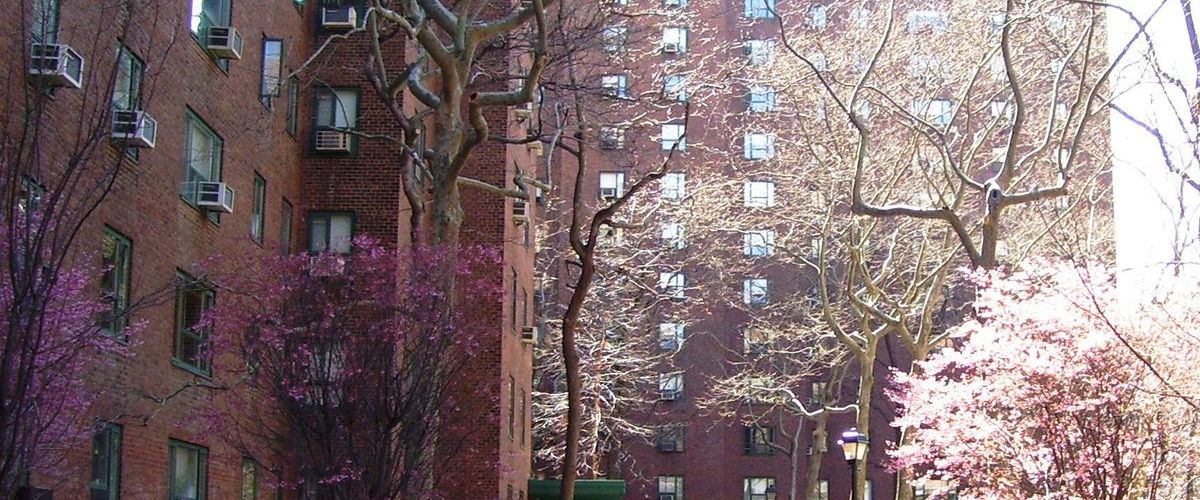
NORC NYC: how naturally occurring retirement community programs work
NORC NYC programs bring services to naturally occurring retirement communities: buildings, housing complexes and neighborhoods that were not built for older adults but have become home to many of them. The help comes to residents where they already live. This guide explains what a NORC is under city and state rules, what the programs offer, who can use them and how to find one, along with the other city services that help people stay in their homes.
General information, not legal, health or financial advice. Everything below comes from NYC Aging, the NYS Office for the Aging and state law as of October 2026. Programs, funding and services change, so confirm the details with the program or with Aging Connect before you rely on them.
What is a NORC in NYC?
NYC Aging, the city's Department for the Aging, describes naturally occurring retirement communities as housing developments or buildings that have, over time, become home to many older adults. The word "naturally" is the point. Nobody designed these places as retirement housing. People moved in younger, stayed for decades and grew older in the same apartments.
A NORC is therefore two things at once. It is a description of a place, and in practice it is also a program: a social service provider that works on site or nearby, offering help to older residents so they can stay healthy, engaged and in their own homes. According to NYC Aging, about 60 NORCs in the city have a social service provider, and the department funds 36 of them.
A NORC is not a senior housing building, an assisted living residence or a 55+ community. You do not apply to live in one, and nothing about the program decides who may rent or buy there. State law builds that in. Under Elder Law section 209, a classic NORC is a building or complex that "was not predominantly built for older adults" and "does not restrict admissions solely to older adults." For housing that is designed around age or care, our guide to senior housing options in NYC covers independent living, assisted living and the city's housing lottery.
Classic NORCs and neighborhood NORCs under state law
New York law recognizes two kinds of naturally occurring retirement community for state funding. The definitions are technical, but they explain what kinds of places can qualify: large apartment buildings and complexes on one side, and defined neighborhoods of smaller homes on the other.
| Classic NORC | Neighborhood NORC | |
|---|---|---|
| What it is | An apartment building or housing complex | A residential dwelling or group of dwellings in a geographically defined neighborhood |
| Built for older adults? | Not predominantly built for older adults | Not predominantly developed for older adults |
| Admissions | Does not restrict admissions solely to older adults | Does not predominantly restrict admission to older adults |
| Share of older residents | At least 40 percent of units have an older adult occupant | At least 30 percent of residents are older adults, or 20 percent in rural areas |
| Minimum count | At least 250 older residents in an apartment building or 500 in a housing complex | No resident count; low-rise buildings of six stories or less and single and multi-family homes, though apartment buildings and complexes may be included |
Sources: Elder Law 209; NYS Office for the Aging, NORC program.
For a classic NORC, the statute adds that a majority of the older adults to be served are low or moderate income. Both definitions measure the population that already lives in a place. They do not describe a building's rules, and they are thresholds for funding, not labels a landlord or co-op board applies. A building can be home to many older residents without a NORC program, and a program can end when its funding does.
What NORC programs in NYC offer
NYC Aging lists four core services at the NORCs it funds:
- Case management. Assessing a resident's needs and strengths, creating a service plan, coordinating services and monitoring needs over time.
- Case assistance. Connecting residents to public benefits, entitlement programs, community services and other resources.
- Healthcare management and assistance. Individual meetings with a healthcare professional to address immediate and ongoing needs, including managing chronic conditions.
- Health promotion. Programs that support health and well-being, such as blood pressure screenings, yoga and tai chi.
Beyond those four, the department says offerings vary by NORC and can include education and recreational programming, transportation, open houses, intergenerational programs and volunteer opportunities, often run with community partners.
The state's list for the programs it funds is similar. The NYS Office for the Aging names four required priority services: case management, healthcare management, information and assistance, plus healthcare assistance and monitoring. Optional services include outreach, transportation, personal care, counseling and telephone reassurance or friendly visiting. The state also sets staffing rules: a qualified full-time director, and for programs receiving $100,000 or more, one full-time equivalent case manager and half a full-time equivalent healthcare professional.
A NORC program is a place to start rather than a full list of services. Elder Law section 209 says the program must actively manage the provision of services but need not be the only provider, so a case manager may connect you with help through other city and state channels.
Who can use NORC services
For the state program, Elder Law section 209 defines older adults as people 60 or older, and the NYS Office for the Aging lists 60 or older as the eligibility age for individuals. NYC Aging's NORC page does not list separate eligibility rules for the programs it funds.
In practice, a NORC program serves older residents of the building, complex or neighborhood it covers. Individual services can have their own conditions, and some city services that a case manager might arrange have income or other criteria. Ask the program directly what it requires, whether there is a waiting list for any service and whether any service carries a fee or a suggested contribution.
Family members can call to ask what is available. If you are helping a parent, ask the program what it needs from the resident, such as consent or an assessment. Our guide to helping a parent downsize in New York covers how to have that conversation and when a move enters the picture.
How NORCs are funded: NYC Aging and the state
Two governments fund NORC programs in New York City, and the counts you see online do not always match because they measure different things.
- NYC Aging says about 60 NORCs in the city have a social service provider, and the department funds 36 of them.
- The NYS Office for the Aging says New York currently funds 43 NORCs. That is a statewide figure under the state program, not a count of city programs.
The state page gives the history. New York's first NORC program started in 1986 with private funding. State legislation in 1994 created 10 NORC programs, and New York City introduced its own NORC legislation in 1999. State funding comes from the annual budget and is awarded through a competitive Request for Applications, with contracts typically running five years. Applicants must complete a needs assessment first.
The state also requires matching money. Elder Law section 209 says state aid must be matched by an amount equal to one quarter of the aid, in money, in-kind support or both. At least half of that match must come from the housing development's governing body or other owners, managers and residents of the buildings or area served, or, with the director's approval, from sources in neighborhoods next to it. The director may waive all or part of the match for a program that will serve a low income or hardship community.
Why this matters to a resident: a NORC program depends on contracts that are renewed, rebid or ended on a government schedule. A program that serves a building today is not a permanent feature of that building. If a program matters to your plans, ask the provider how it is funded and when its contract runs.
Sources: NYC Aging, NORCs; NYS Office for the Aging, NORC; Elder Law 209.
How to find a NORC program near you
Start with the official tools:
- NYC Aging's Find Services page. The NORC page directs residents to Find Services to locate the nearest funded NORC and its programs. That page links to a Services Finder and an Activities Finder.
- Aging Connect. NYC Aging's information line is 212-AGING-NYC (212-244-6469). The department's home page also tells callers they can use 311.
- The state directories. The NYS Office for the Aging NORC page links to contact directories for the classic and neighborhood NORCs the state funds.
- Your building's management. In a large complex, the managing agent or the resident association may know whether a program serves the property and where its office is.
When you reach a program, ask which buildings or streets it covers. A neighborhood NORC has a defined boundary, and being a block outside it can make a difference.
Other aging in place programs in NYC
Not every building or neighborhood has a NORC program, and the city runs services that do not depend on one. These are the NYC Aging programs most relevant to staying at home, as described on the department's pages in October 2026.
Case management and in-home services
NYC Aging's in-home services are open to residents 60 and older. A contracted local agency takes a phone intake, then a case manager visits the home to determine eligibility and coordinate services. The page says case managers do not charge for their time, though some services carry a fee or suggested contribution depending on income. Services available through case management include benefits assistance, home-delivered meals, home care (personal care and housekeeping), long-term care counseling and nutrition counseling. The page states that Medicaid recipients are ineligible for the department's home care service.
Home modifications
The Older Adult Home Modification Program sends a licensed occupational therapist to assess the home, then arranges no-cost modifications such as grab bars, handrails, raised toilet seats, shower chairs, improved lighting, temporary ramps and non-slip flooring, installed by a licensed contractor with a follow-up visit. For eligibility and applications, the page lists 212-602-4455 and [email protected]. If you own a co-op or condo, ask the managing agent what approval the building requires before any work starts.
Rent help and housing court support
The same housing support page describes the Senior Citizen Rent Increase Exemption. It lists four conditions. You must be 62 or older and the head of household. Total annual household income must be $50,000 or less. Rent or carrying charges must be more than one third of monthly household income. Eligible tenants have their rent frozen at the current level. Residents of HDFC or Mitchell-Lama apartments apply through HPD at 212-863-8494, and the page lists 311 for more information. The page also describes Tenancy and Eviction Support Services for older adults facing eviction in Manhattan, Brooklyn or Bronx housing court. Homeowners should look instead at our guide to New York senior property tax exemptions.
Transportation, centers and visiting
- Transportation. NYC Aging's transportation page describes rides to medical and social service appointments for residents 60 and older who lack access to transportation or cannot use public transportation, and group trips with a minimum of five older adults. For MTA programs, see getting around NYC after 65.
- Older adult centers. NYC Aging says there are more than 300 older adult centers and affiliated sites across the five boroughs, with free membership for New Yorkers 60 and older, meals and activities such as computer classes, arts and crafts and gardening.
- Friendly Visiting. A volunteer program for older adults who are homebound, with visits at home or by phone or video. Sign up through Aging Connect.
NY Connects
NY Connects gives free information and assistance on long-term care options to people of all ages and income levels, whether they want to stay at home or move. It can help determine eligibility for benefits and make referrals such as home care. The statewide number is 1-800-342-9871, and NYC Aging lists a provider and phone number for each borough on its page.
NORC programs when you are deciding whether to stay or move
For many people, a NORC program is one of the things that makes staying workable. Help with benefits, a healthcare professional who helps manage a chronic condition and exercise classes downstairs can change how a home feels to live in. Our guide to aging in place versus downsizing sets out the wider trade-offs, including stairs, home changes and costs.
If you are thinking about a move, treat a NORC program the way you would treat any other service near a home: something to ask about and confirm, not a promise.
- It is a service, not a feature of the deed. The program does not set rents, maintenance or common charges and does not change a building's rules. Those come from the lease, the building's documents and its budget. Our guide to co-op maintenance fees in NYC explains what a co-op's monthly charge covers.
- It can change. Programs run on government contracts, as described above.
- Coverage has edges. A classic NORC covers a building or complex and a neighborhood NORC a defined area. Confirm that a specific address is inside the boundary.
- Many services do not depend on a NORC. Case management, home modifications, older adult centers and NY Connects are available citywide.
The building itself still matters. Elevators, the trip to the street and the cost of carrying the home are separate questions, and our guide to downsizing from a house to an apartment covers them. Buildings with income limits, such as some HDFC and Mitchell-Lama co-ops, have their own rules described in HDFC and Mitchell-Lama co-ops.
Consider a hypothetical, not a real person: a longtime resident who needs help with benefits and a health condition. With a NORC program in the complex, a case manager down the hall may cover much of that. Without one, the same person can ask Aging Connect for a case management agency. Either way, whether to move still turns on the home and the budget.
Questions to ask a NORC program
Keep notes of each call and the name of the person you spoke with.
- Which buildings, addresses or streets does the program serve?
- Who funds it, NYC Aging, the state or both, and when does the current contract run?
- What services are offered on site, and which are arranged through other agencies?
- Is a healthcare professional available, and on which days?
- Do any services have a fee, suggested contribution, income rule or waiting list?
- How does a family member or caregiver get in touch, and what consent is needed?
- What classes, trips or volunteer opportunities are on the current schedule?
Next steps
To find out whether a NORC program serves your address, start with NYC Aging's Find Services page or call 212-AGING-NYC (212-244-6469). If no program covers you, ask Aging Connect for a case management agency, and look at the home modification program if the apartment itself is the obstacle. The resources page collects other official contacts.
If you are weighing a move, where to downsize describes neighborhoods across the five boroughs, and Costs and Money covers what selling and buying involve. When you want to talk through a sale or a purchase, get matched with a local agent. Introductions go to agents on the operating team at eXp Realty, so this is not a search of the whole market.
Questions people ask
What is a NORC in NYC?
A NORC, or naturally occurring retirement community, is a housing development, building or neighborhood that was not built for older adults but over time has become home to many of them. NYC Aging says about 60 NORCs in the city have a social service provider, and it funds 36 of them. The program brings services to residents where they already live.
Is a NORC a senior housing building?
No. A NORC is a service program, not a type of housing. Under New York's Elder Law section 209, a classic NORC is a building or complex that was not predominantly built for older adults and does not restrict admissions solely to older adults. You do not apply to live in a NORC. Eligible residents of the area use the program's services.
Who is eligible for NORC services in New York?
State law defines older adults for the NORC program as people 60 or older, and the NYS Office for the Aging lists 60 or older as the eligibility age. NYC Aging's NORC page does not list separate eligibility rules, so ask the program serving your building or neighborhood what it requires and which services have their own criteria.
What services does a NORC program provide?
NYC Aging lists four core services at the NORCs it funds: case management and case assistance with benefits and community resources, plus healthcare management and assistance and health promotion such as blood pressure screenings, yoga and tai chi. Some programs add education and recreation, transportation, open houses, intergenerational programs or volunteer opportunities. Offerings differ by program.
How do I find a NORC near me in NYC?
NYC Aging points residents to its Find Services page, which links to a Services Finder, to locate the nearest funded NORC and its programs. You can also call Aging Connect at 212-AGING-NYC (212-244-6469) or 311. The NYS Office for the Aging posts contact directories for classic and neighborhood NORCs it funds on its NORC page.
Does living near a NORC change what I pay for housing?
A NORC program does not set rents, maintenance or common charges, and it does not change a building's rules. Housing costs come from the lease, the co-op or condo documents and the building's budget. State-funded programs must raise a match equal to one quarter of the state aid, and state law says at least half of that match comes from the housing's governing body, owners, managers and residents unless the director approves another source or a waiver. Ask the program how it is funded.
Related guides
- Downsizing from a house to an apartment in New York: what changes day to dayDownsizing from a house to an apartment in NYC: who fixes what, building rules, the super and managing agent, trash and packages, and upkeep you hand off versus charges you take on.
- Downsizing tips for seniors in New York: a practical guidePractical downsizing tips for seniors in New York City: sizing your belongings to apartment space, building rules, DSNY disposal, donation, a decluttering checklist and NYC Aging.
- Aging in place or downsizing in New York: how to decideAn honest comparison of staying put and downsizing in New York: stairs and elevators, home modifications, costs to weigh and the NYC Aging and NY Connects services.
- Buy first or sell first? Timing a downsizing move in New YorkThe trade-offs of buying before you sell or selling before you buy in New York, including co-op board timing, contingencies, bridge financing, rent-backs and temporary rentals.
Plan your move
We can introduce you to a licensed New York area agent with eXp Realty who works with homeowners moving to less house. New York Downsizing is operated by licensed agents affiliated with eXp Realty and is not a New York brokerage.