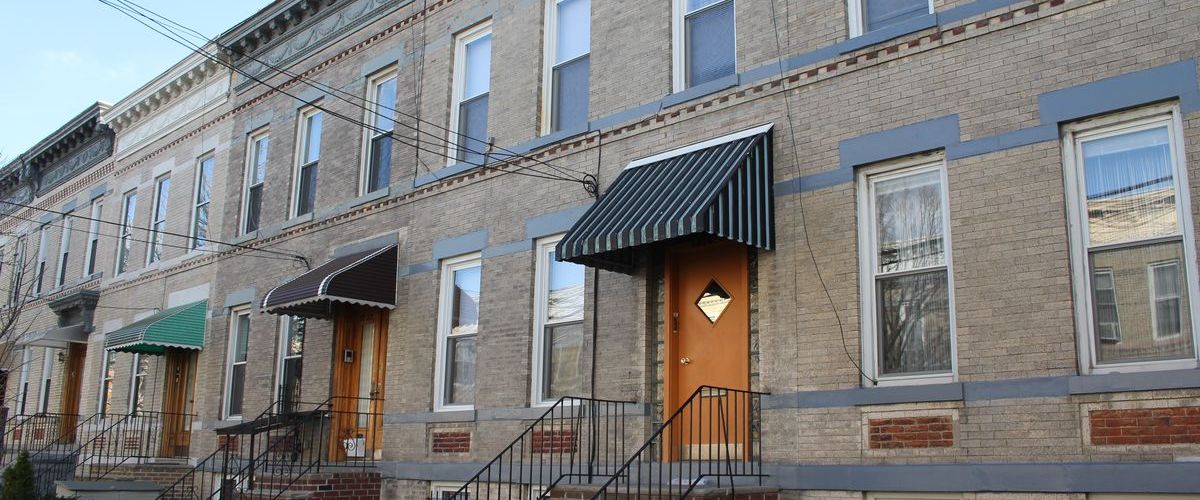
Selling a house with tenants in NYC: leases, deposits and the law
Selling a house with tenants in NYC is allowed, but the sale does not wipe the slate clean. In general, existing leases and the legal protections attached to each unit carry over to the buyer, and security deposits must move with them. This guide explains, from official sources, how leases, rent stabilized status and deposits are handled when an occupied home changes hands. It also covers the records to gather before listing.
General information, not legal advice. A sale with tenancies in place needs a New York real estate attorney. This guide describes the rules in general terms so you know what to ask. Your leases, the type of building and the regulatory status of each unit decide what applies to you.
What happens to the lease when you sell a house with tenants
A deed transfers the property. It does not, by itself, end the tenancies inside it. New York's Real Property Law section 223, titled "Rights where property or lease is transferred," says the person who takes over leased property has the same remedies the original landlord had for unpaid rent or a breach of the lease. It also gives the tenant's side the same remedies against the new owner that it had against the old one. Put simply, the buyer steps into the landlord's shoes.
The New York City Rent Guidelines Board puts the same idea plainly on its security deposit page: all leases remain valid even if a building is transferred through mortgage foreclosure. A voluntary sale is no different in this respect. The buyer inherits the lease terms, the rent in place and the duties that come with being a landlord.
That shapes the whole sale. You are selling a property with income and obligations attached, and a buyer's attorney will want proof of both. The rest of this guide covers what governs each unit and what paperwork the buyer will expect.
Sources: RPL 223; NYC Rent Guidelines Board, security deposits.
First, know what kind of tenancy each unit has
The rules depend less on the house than on the legal status of each rented unit. Before you talk to a broker or a buyer, sort every unit into one of these groups, with your attorney's help:
- Rent stabilized. Governed by the Rent Stabilization Law and administered by New York State Homes and Community Renewal (HCR). The city's tenant support unit says stabilized apartments are most often in buildings with six or more units built before 1974, but that is a pattern rather than a test, and not every unit in a covered building is necessarily stabilized.
- Unregulated with a written lease. The lease and state law, including notice rules, govern the tenancy.
- Unregulated without a lease, or month to month. State notice rules still apply before the tenancy can end.
- Possibly covered by the Good Cause Eviction Law. Real Property Law article 6-A adds limits on ending some unregulated tenancies and has a section on its application in New York City. Section 214 lists exclusions, among them units owned by a small landlord as the law defines that term, owner-occupied buildings of ten or fewer units, units already subject to rent regulation and buildings with a certificate of occupancy issued on or after January 1, 2009, for thirty years.
Do not guess the category. The Rent Guidelines Board says it has no information on whether a particular apartment is stabilized and points to HCR. HCR's rent regulation page says owners register stabilized rents with its Office of Rent Administration each year, and that registration information may be released only to the tenant of record, the owner or an authorized representative. As the owner, you or your attorney can ask HCR for the registration history of each unit.
Rent stabilized tenant sale: what carries over to the buyer
A rent stabilized apartment keeps its protections when ownership changes. HCR's Fact Sheet #4 (FS-04, 04/2023) describes stabilization as rules under which tenants are entitled to required services, to have their leases renewed and not to be evicted except on grounds allowed by law. Those are duties of whoever owns the building.
Some specific points from the official sources:
- Renewal leases. Per Fact Sheet #4, a stabilized tenant generally must be offered a renewal lease of one or two years at the tenant's choice, at a rate set by the Rent Guidelines Board. In New York City the owner offers it on HCR form RTP-8 between 90 and 150 days before the current lease ends, with the city's lease rider for stabilized tenants.
- No exit by rent level. The Rent Guidelines Board notes that apartments now remain stabilized regardless of the rent level. The Housing Stability and Tenant Protection Act of 2019 (Chapter 36 of the Laws of 2019, signed June 14, 2019) repealed high-rent vacancy deregulation and high-income deregulation.
- Owner use is narrow. The same 2019 law limited how an owner can recover stabilized units for personal use. The Board's FAQ says the owner must show an immediate and compelling need, may recover only one unit and must give written notice 90 to 150 days before the lease expires.
- Deposits. The Attorney General's office says purchasers of rent stabilized buildings are directly responsible to tenants for returning security deposits and any interest, whether or not the seller handed the deposits over.
For a seller, the practical point is that a stabilized unit is sold as a stabilized unit. Its registered rent, lease history and renewal obligations are part of what a buyer is purchasing, and a buyer's attorney will usually want to see them before signing.
Sources: HCR Fact Sheet #4; Rent Guidelines Board, rent stabilization FAQ; S6458 of 2019; NY Attorney General, rent security.
Security deposits when a house with tenants is sold
The statutes on security deposits are specific. General Obligations Law section 7-105 says that when a property is conveyed, the landlord must turn the deposits over to the new owner at the delivery of the deed or within five days after. Within the same window, the landlord must notify each tenant by registered or certified mail of the name and address of the new holder. A landlord who does this is released from liability for returning the deposit, and the new holder becomes responsible. Failing to comply is a misdemeanor under the section.
Section 7-108, the deposit rules the 2019 law strengthened, adds several points that matter in a sale:
| Rule | What the statute says |
|---|---|
| Maximum deposit | No more than one month's rent, with listed exceptions (subdivision 1-a(a)) |
| Return after move-out | Within fourteen days, with an itemized statement of anything kept (1-a(e)) |
| Buyer's liability | If deposits were not turned over under section 7-105, the buyer is liable when it has "actual knowledge" of them, for example through a lease in effect at closing that acknowledges the deposit (2(a), 2(b)) |
| No record of a deposit | The buyer must notify the tenant in writing within 30 days after closing, and the tenant then has 30 days to produce a cancelled check, receipt or signed lease (2(c)) |
| Escrow | The buyer may require the seller to set up an escrow equal to one month's rent for units with no deposit record (2(d)) |
Interest can matter too. The Attorney General's publication says a tenant is entitled to interest if the building has six or more apartments, or in any building where the landlord put the deposit in an interest-bearing account. If interest is owed, it travels with the deposit.
For each unit, your attorney will want the deposit amount, where it is held and proof of how it was paid. If a record is missing, say so early, since the escrow and notice provisions above give the buyer tools to protect itself and your attorney will want to plan for them.
Sources: GOL 7-105; GOL 7-108; NY Attorney General, rent security.
Selling an occupied two-family home in NYC
An owner who lives in one unit of a two-family house and rents the other has its own paperwork to sort out. The city's Department of Housing Preservation and Development (HPD) says buildings with three or more units must register with HPD every year, and a one or two family home must register only when neither the owner nor the owner's family lives there. Registration is filed between May 21 and September 1 and the fee is $13 per year. A registration must be filed whenever ownership changes.
Two practical consequences follow. First, if you moved out before selling, your two-family home may have needed registration, and your attorney should know whether one is on file. Second, the buyer's status will change the picture after closing: a buyer who will not live there may need to register, and HPD offers an application to invalidate a former owner's registration.
The official sources tie rent stabilization mainly to buildings of six or more units, but confirm each unit's status rather than assume it. Any rented unit is still covered by the notice rules below, and whether the Good Cause Eviction Law reaches a unit depends on its exclusions, including the one for owner-occupied buildings of ten or fewer units. That exclusion depends on who occupies the building, which is exactly what changes in a sale. Ask your attorney how it applies before and after closing.
Occupied or vacant: what a seller can and cannot control
A buyer who plans to live in the house may ask for it empty at closing, so sellers often ask whether they can deliver it that way. The honest answer is that the law, not the contract, decides whether a tenancy can end.
For unregulated units, Real Property Law section 226-c requires written notice before a landlord declines to renew a tenancy or raises the rent by five percent or more. The notice period is at least 30 days for occupancy under one year, 60 days for one to two years and 90 days for more than two years or a lease of two years or longer. The notice must also say whether the unit is subject to the Good Cause Eviction Law and, if not, why. If notice is late, the tenancy continues on its existing terms until the notice period runs.
For rent stabilized units, the renewal rules above apply, and owner use is limited to one unit on a showing of immediate and compelling need. For units under the Good Cause Eviction Law, the article's section 215, "Necessity for good cause," and section 216 on grounds for removal set further limits.
Three things follow for the contract:
- Do not agree to deliver a unit vacant unless your attorney has confirmed a lawful path to it and the timing works.
- Expect the contract to list each unit, its rent, its lease term and its deposit, with your statement that the list is accurate.
- Any buyout or relocation agreement with a tenant is a legal document. Do not draft one yourself.
If you have not yet decided whether to sell or keep the property as a rental, our guide on whether to sell or rent out your NYC home lays out the trade-offs.
What a seller should gather before listing
A sale with tenancies goes more smoothly when the buyer's attorney gets clean records early. Gather these for each rented unit and give them to your own attorney first:
- The current lease, all renewals and any riders, including the stabilized lease rider where it applies
- A rent roll showing each unit with its monthly rent, any preferential rent and the lease start and end dates
- Security deposit records for each unit, with proof of payment and the bank and type of account that holds the money
- HCR registration records for any stabilized unit, and HPD registration records if the property required them
- Copies of any notices you have sent, such as renewal offers or non-renewal notices, with proof of delivery
- Any open complaints, violations or court matters involving the property
- Service contracts, utility arrangements and anything else a new owner must take over
Your attorney may also suggest asking each tenant to confirm the lease terms and deposit in writing before closing. Whether to do that, and how, is your attorney's call.
Disclosures, showings and access
An occupied house still carries the seller's disclosure duties. Our guide to New York seller disclosures covers the Property Condition Disclosure Statement and the federal and city lead paint rules, and explains which apply to which homes.
Showings are a separate question. Access to a rented unit is governed by the lease and the law, not by a listing agreement. Ask your attorney what notice the lease requires before an agent, appraiser or inspector enters, and put the answer in writing for your agent. Photographs of an occupied unit should show the property, not anyone's belongings or personal details.
Why this sale needs a real estate attorney
Every section above ends with "ask your attorney" for a reason. Selling a house with tenants in NYC combines contract law, landlord and tenant statutes, rent regulation and deposit rules. A mistake in any one of them can follow you after closing. A broker cannot fill that role: the Department of State's Legal Memorandum LI04 says brokers and salespersons must refrain from providing legal advice to their clients.
Bring your leases and the checklist above to the first meeting, and ask the attorney how many sales of occupied property they have handled. Our guide to hiring a real estate attorney for an NYC home sale explains what the seller's attorney does and lists the official bar referral services.
If a unit's status, a deposit record or a notice history is unclear, HCR, HPD and the Attorney General's office are the official places to check. The resources page collects official contacts.
Taxes, costs and your net proceeds
Rental use can change the tax picture of a sale. IRS Publication 523 (2025) says you generally cannot exclude gain on a separate portion of a property used to produce rental income, and that the home sale exclusion is reduced by depreciation adjustments. In a two-family house where you rented one unit, that can mean part of the gain is taxed differently. Our capital gains tax guide covers the basics, and a CPA should run your numbers.
Ask your attorney how deposits and any rent collected for the month of closing will be handled on the closing statement, which also lists transfer taxes, commissions and your loan payoff. Read estimating net proceeds for the full list and try the net proceeds calculator. See Costs and Money for the bigger picture.
Planning the move after the sale
If you live in the house you are selling, line up your next home alongside the sale. Our guide on whether to buy first or sell first covers the timing trade-offs, and where to downsize compares areas across the city and beyond. When you want to talk through a sale with an agent, get matched. Introductions go to agents on the operating team at eXp Realty, so this is not a search of the whole market, and the agent will not replace your attorney.
Questions people ask
Can I sell my house in NYC if it has tenants?
Yes. A tenancy does not stop an owner from selling. What changes is what the buyer receives: under Real Property Law section 223, the person who takes over a leased property steps into the landlord's position, with the same remedies under the lease. In general terms, the buyer takes the property subject to the existing tenancies. A real estate attorney should confirm how that applies to your leases.
Does a lease end when the house is sold?
Generally, no. A sale transfers the landlord's role to the buyer rather than ending the lease. The New York City Rent Guidelines Board notes that all leases remain valid even when a building is transferred through mortgage foreclosure. Whether and how a particular tenancy can end later depends on the lease, the type of unit and the notice rules in state law, which your attorney can explain.
What happens to a rent stabilized apartment when the building is sold?
Rent stabilization rules continue to govern the apartment under the new owner. HCR says stabilized tenants are entitled to required services and renewal leases and may not be evicted except on grounds allowed by law. The Attorney General says purchasers of rent stabilized buildings are directly responsible for returning security deposits and interest, whether or not they received them from the seller.
What do I do with security deposits when I sell?
General Obligations Law section 7-105 says the seller must turn deposits over to the buyer at the delivery of the deed or within five days after, and notify each tenant by registered or certified mail of the new holder's name and address. A seller who does this is released from liability for returning the deposit. Ask your attorney to build the transfer and notices into the closing.
Can I deliver a two-family house vacant to a buyer?
Only if the law and the leases allow the tenancy to end before closing, and that is a question for a New York attorney. State law requires 30, 60 or 90 days of written notice before a landlord declines to renew, depending on how long the tenant has lived there. Rent stabilized units and units covered by the Good Cause Eviction Law have added limits. Do not promise vacancy in a contract until your attorney confirms it.
Do I need a real estate attorney to sell a house with tenants?
Yes, in practice. A sale with tenancies adds lease review, security deposit transfers, rent regulation questions and terms in the contract about occupancy, all of which turn on statutes and your documents. A broker may not give legal advice. Hire a New York real estate attorney before you sign a listing or accept an offer, and bring your leases to the first meeting.
Related guides
- How to sell a condo in NYC: the steps from listing to closingThe path to selling a deeded condo unit in New York City: documents, the board and any right of first refusal, common charges, transfer taxes, the deed and the closing.
- Condo right of first refusal NYC: how it works when you sellHow a condo board's right of first refusal works in New York City, where the declaration and by-laws set it, what offering plans must disclose and what a waiver is.
- Selling a home in NYC: new laws and rule changes to knowA dated list of recent changes that touch a New York home sale: disclosure form updates, buyer agent agreements, co-op board deadlines and the pied-a-terre surcharge.
- How to sell a co-op in NYC: the steps from listing to closingThe path to selling co-op shares in New York City: documents, the managing agent, the board package, the flip tax and other building charges, the contract and the closing.
Plan your move
We can introduce you to a licensed New York area agent with eXp Realty who works with homeowners moving to less house. New York Downsizing is operated by licensed agents affiliated with eXp Realty and is not a New York brokerage.