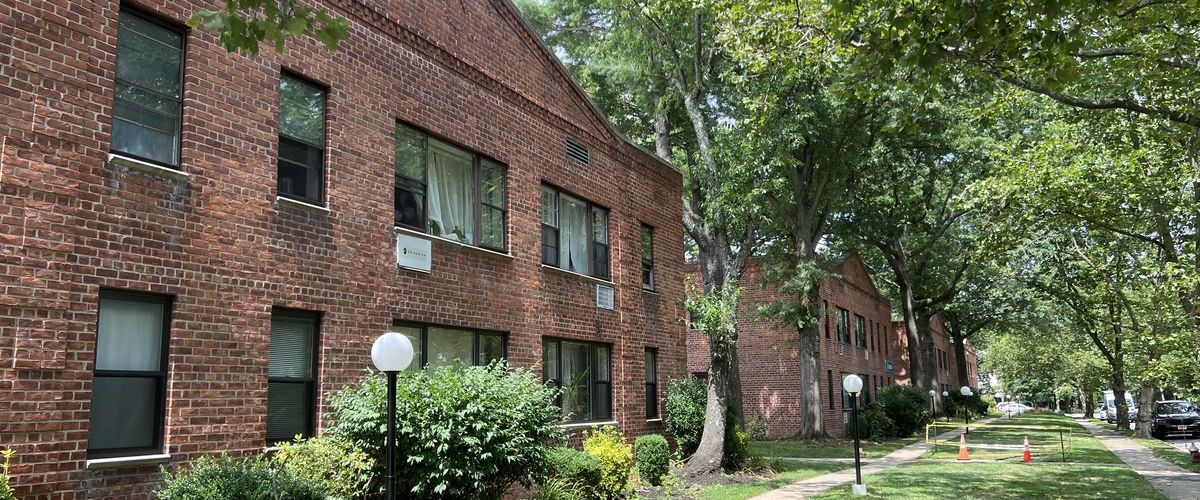
55 and over communities on Long Island: buying versus renting
A 55 and over community on Long Island may sell its homes or lease them. The federal age rule applies either way, but the rest of the arrangement does not. A renter is protected by New York's landlord and tenant laws, including a cap on security deposits, while an owner carries the property tax and is the one who can claim STAR and the senior citizens exemption. This guide sets out what changes between the two, with the statutes that govern each.
General information, not legal or tax advice. Everything below comes from New York statutes, federal regulations and the NYS Department of Taxation and Finance as read in November 2026. Laws and limits change, and a community's own documents can add rules. Ask a New York attorney to review a lease or purchase contract before you sign it.
Buying or renting in a Long Island 55+ community at a glance
The choice is less about the building than about which law and which documents you live under. An owner and a tenant two doors apart can have very different rights over deposits, notice, repairs and taxes.
| Buying | Renting | |
|---|---|---|
| What you hold | A deed to a unit or home, or shares and a proprietary lease in a co-op | A lease for a set term, or a month-to-month tenancy |
| Where the rules live | Declaration, by-laws, proprietary lease or HOA covenants | The lease and the landlord's written policies |
| Federal 55+ age rule | Applies | Applies |
| Upfront money | Down payment and closing costs | Security deposit capped at one month's rent in most cases |
| Repairs inside the home | Divided between owner and association by the documents | The landlord's warranty of habitability, which a tenant cannot waive |
| Property tax relief | STAR and the senior citizens exemption, if eligible | No STAR or 467 exemption; a low income renter credit may apply |
| Leaving | Sell the home, subject to any approval or resale rules | Lease ends, early termination rights in some cases, landlord must try to re-rent |
For the community names and locations covered on this site, see our page on 55+ communities on Long Island. Whether a particular property sells homes, leases them or does both, and on what terms, is something to ask the community directly.
The federal age rule covers 55+ rentals and sales alike
A community can limit occupancy by age only if it qualifies as housing for older persons under the Fair Housing Act, 42 U.S.C. 3607(b)(2)(C): at least 80 percent of occupied units with at least one occupant 55 or older, published policies showing that intent and compliance with HUD's verification rules.
Nothing in that test turns on ownership. HUD's regulation at 24 CFR 100.304 defines a housing facility or community as any dwelling or group of dwelling units governed by a common set of rules, and its list of examples includes a condominium association, a cooperative, a property governed by a homeowners or resident association and "a leased property under common private ownership." A single landlord's rental complex can qualify as readily as a condo.
Under 24 CFR 100.307, the community's procedures for checking each unit's occupancy "may be part of a normal leasing or purchasing arrangement," and a signed certification in a lease or application by a household member 18 or older counts as reliable proof of age. The same section requires updates at least once every two years, so a tenant can expect to be asked again at renewal or in a survey.
Sources: 42 U.S.C. 3607; 24 CFR 100.304, 100.305 and 100.307.
Renting in a 55 and over community on Long Island: New York tenant protections
A lease in a 55+ rental community is still a residential lease, and New York's Real Property Law applies to it as to any other. Three sections matter most.
The warranty of habitability
Under Real Property Law 235-b, every written or oral residential lease carries the landlord's promise that the premises are fit for human habitation and that occupants will not be subjected to conditions dangerous, hazardous or detrimental to their life, health or safety. A lease clause that waives or modifies the warranty is void. An owner in a condo or HOA has no landlord making that promise. The declaration, by-laws or covenants divide repair duties between the owner and the association.
Protection from retaliation
Real Property Law 223-b bars a landlord from serving a notice to quit, starting an eviction or substantially changing the terms of a tenancy because a tenant made a good faith complaint about health or safety violations or the warranty of habitability, acted to enforce lease rights or joined a tenants' organization. If the landlord acts within one year of the protected activity, retaliation is presumed and the landlord must show another reason. The section does not cover owner-occupied dwellings with fewer than four units.
Application and late fees
Real Property Law 238-a bars application fees, except that a landlord may pass on the actual cost of a background or credit check, up to $20, and must waive it if you provide a check from the past 30 days. A late fee may not be charged until rent is more than five days late, and it is capped at $50 or 5 percent of the monthly rent, whichever is less.
Security deposits for 55+ rentals under GOL 7-108
The deposit rules a renter meets at signing and at move-out come from General Obligations Law 7-108. In the order you would encounter them:
- The cap. No deposit or advance may exceed one month's rent (subdivision 1-a, paragraph a). The statute carves out seasonal use units and owner-occupied co-op apartments.
- What it covers. The landlord may keep money only for unpaid rent, damage beyond normal wear and tear caused by the tenant, unpaid utilities owed to the landlord and certain moving and storage costs. The rest is refundable (paragraph b).
- Inspection before you move in. The landlord must offer you the chance to inspect the home with them before you take possession (paragraph c).
- Inspection before you move out. The landlord must tell you in writing of your right to request an inspection, held no earlier than two weeks and no later than one week before the tenancy ends, with at least 48 hours' written notice (paragraph d).
- The 14-day deadline. Within 14 days after you vacate, the landlord must give an itemized statement of anything kept and return the rest. A landlord who misses the deadline forfeits any right to keep any portion (paragraph e).
- Penalty. A landlord found to have willfully violated the subdivision is liable for punitive damages of up to twice the deposit (paragraph g).
An example applying the cap, not a real listing: on a lease at $3,000 a month, the deposit can be no more than $3,000, and a willful violation could expose the landlord to punitive damages of up to $6,000.
Senior housing the deposit cap does not cover
The same subdivision does not apply to licensed continuing care and assisted living providers, adult care facilities, senior residential communities that have submitted an offering plan to the Attorney General and certain not-for-profit independent retirement communities that offer services such as emergency response, housekeeping, transportation and meals. Units subject to New York's rent control and emergency tenant protection laws are also outside that subdivision. If a community calls itself senior living and asks for an entrance fee or a larger deposit, ask in writing which law governs that payment and whether it is refundable.
Source: General Obligations Law 7-108.
Lease renewals, rent increases and leaving a 55+ rental early
The main risk of renting is what happens at the end of each term. Under Real Property Law 226-c, a landlord who intends to offer a renewal with a rent increase of 5 percent or more, or not to renew, must give written notice:
| How long you have lived there, or your lease term | Minimum written notice |
|---|---|
| Less than one year, with no lease of at least one year | 30 days |
| One to two years, or a lease of one to two years | 60 days |
| More than two years, or a lease of at least two years | 90 days |
If the landlord gives notice late, the tenancy continues on its existing terms from the date notice was actually given until the full notice period runs. The section does not cap the size of an increase in an unregulated apartment.
Leaving early is the other side. Real Property Law 227-e requires a landlord whose tenant leaves in violation of the lease to take reasonable and customary steps, in good faith, to re-rent the home at fair market value or the lease rate, whichever is lower. The party seeking damages carries the burden of proof.
For a tenant 62 or older, Real Property Law 227-a goes further. A tenant who is 62, or will turn 62 during the lease, may end it to move into an adult care facility, a residential health care facility, subsidized low income housing or less expensive premises in a housing project built for senior citizens. It also covers a move to a family member's home when a physician certifies the tenant can no longer live independently. Notice goes to the landlord in writing, the termination takes effect no earlier than 30 days after the next rent payment is due, and the tenant owes no rent for the period after that. Supporting papers, such as an executed lease or admission contract with the new residence, go with the notice. An owner has no equivalent: leaving means selling.
Buying in a 55+ community: what ownership adds
Buying trades those tenant protections for control. You decide when to leave and face no renewal increase. In exchange, you carry the property tax, association charges, any special assessment and your own repairs, plus the cost of selling when you move again.
The form of ownership shapes how much control you really have, and our comparison of a co-op, condo, townhouse, house or 55+ community walks through each. The age policy, rules on renting out your own unit, guests and resale terms all sit in the condo declaration and by-laws, the co-op proprietary lease or the HOA covenants. Before you buy, ask how those documents can be amended and what vote that takes, since a later change would bind you as an owner.
Property tax exemptions: what owners get and renters do not
New York's main property tax breaks for older residents attach to ownership. A renter pays property tax indirectly through the rent and cannot claim these benefits on the landlord's parcel.
- STAR. The Tax Department's eligibility page says the property must be owned by the eligible applicants and be an owner's primary residence. To get the STAR credit in a given year, you must own the home and live there as of July 1. Enhanced STAR requires at least one resident owner to be 65 by December 31 of the benefit year, with an income limit of $110,750 for 2026 benefits and $113,550 for 2027.
- The senior citizens exemption. Under the Real Property Tax Law 467 program, localities that opt in reduce the taxable assessment of a qualifying senior's home by up to 50 percent. You generally must have owned the property for 12 consecutive months before filing, but the Tax Department says ownership of a prior home can count where it was sold and a replacement bought within one year and both are in New York. A senior who buys after the local filing deadline may apply up to 30 days after the purchase.
Renting for a year or more between homes can therefore restart the 12 months, so ask the assessor for the town where you plan to buy before you set a timeline. Our guide to New York senior property tax exemptions covers the income rules and local options in more detail.
Tax help for renters
New York's real property tax credit is a refundable income tax credit for both homeowners and renters. A renter qualifies only if, among other conditions, federal adjusted gross income is $18,000 or less, the same New York home was occupied for six months or more, the household's average monthly rent was $450 or less (not counting heat, gas, electricity, furnishings or board) and any real property owned was worth $85,000 or less. The credit can be as much as $375 if the filer, a spouse filing jointly or a claimed dependent is 65 or older, and up to $75 otherwise. It is claimed on Form IT-214, even by people who do not otherwise file a return.
Sources: NYS Tax, STAR eligibility; NYS Tax, senior citizens exemption; NYS Tax, real property tax credit.
Selling your Long Island house first, then renting a 55+ home
Renting can be a stage rather than the destination: a way to separate the sale of the old house from the next purchase. That avoids carrying two homes at once, but it brings a second move, rent paid while you wait and a possible restart of the senior exemption clock.
A hypothetical, not a real household: a homeowner sells a house in Suffolk County, rents a two-bedroom home in a 55+ rental community on a one-year lease. Under Real Property Law 226-c, the landlord must give at least 60 days' written notice of a renewal increase of 5 percent or more, so the new rent is known about two months before the lease ends. If the homeowner buys after that, more than a year after the sale, the 467 exemption would generally need a fresh 12 months of ownership.
On the sale side, our guide to selling a house on Long Island covers the transfer tax, the county steps and closing out STAR, and the guide to capital gains tax on a New York home sale covers the federal exclusion. If you are weighing whether to keep the old house and rent it out instead, see should I sell my house or rent it out. The timing questions are in buy first or sell first, and the net proceeds calculator helps estimate what the sale leaves you to work with.
Questions to ask a Long Island 55+ community before you sign
Get the answers in writing and keep copies with the lease or contract.
- Does the community sell homes, lease them or both, and does the same age policy apply to each?
- May I see the published age policy and a summary of the latest occupancy survey?
- For a rental: what is the deposit, which law governs it and when will I get the move-in inspection?
- Is any payment described as an entrance fee, community fee or advance, and is it refundable?
- What is the lease term, and has the rent risen at recent renewals?
- For a purchase: which documents govern, and how can the age rules and rental rules be amended?
- Who handles repairs inside the home and who handles the grounds and building systems?
- Which town assessor values the property, and what exemptions do current owners receive?
Next steps
Decide whether you want the flexibility of a lease or the control of ownership, then read the documents that come with that choice. The resources page lists official contacts, and Costs and Money covers what selling and buying involve. When you want to talk through a sale or a purchase, get matched with a local agent. Introductions go to agents on the operating team at eXp Realty, so this is not a search of the whole market.
Questions people ask
Can a 55 and over community on Long Island rent apartments instead of selling them?
Yes. The federal rule for housing for persons 55 and older lists "a leased property under common private ownership" as one kind of housing facility or community, alongside condominiums, cooperatives and homeowners associations. A rental community has to meet the same occupancy, published intent and age verification rules as one where homes are sold. Ask the manager for its age policy and its most recent occupancy survey summary.
How much can a landlord charge for a security deposit in New York?
Under General Obligations Law 7-108, a deposit or advance cannot exceed one month's rent. The landlord must return it, with an itemized statement of anything kept, within 14 days after you move out, or lose the right to keep any of it. The section lists exclusions, including licensed continuing care and assisted living providers and senior residential communities that have filed an offering plan with the Attorney General.
Do renters in a 55+ community get STAR or the senior citizens exemption?
No. Both STAR and the senior citizens exemption under Real Property Tax Law 467 are for owners of the property. A renter with low income may instead qualify for New York's real property tax credit, claimed on Form IT-214. It requires federal adjusted gross income of $18,000 or less and average monthly rent of $450 or less, and the credit can reach $375 when someone in the household is 65 or older.
Can I break a lease if I move into assisted living?
New York's Real Property Law 227-a lets a tenant who is 62 or older, or will turn 62 during the lease, end the lease to move into an adult care facility, a residential health care facility, subsidized low income housing or less expensive senior citizen housing, among other cases. Notice must be in writing, and the termination takes effect no earlier than 30 days after the next rent payment is due. Proof such as a signed admission contract is required.
How much notice must a landlord give before raising the rent?
Under Real Property Law 226-c, a landlord who plans a renewal with a rent increase of 5 percent or more, or plans not to renew, must give written notice. It is 30 days if you have lived there under a year, 60 days for one to two years and 90 days for more than two years or a lease of two years or more. Late notice extends the current terms.
Does the 55+ age rule work differently for owners and renters?
The federal test is the same: at least 80 percent of occupied units must have at least one occupant 55 or older, and the community must publish and follow age policies. What differs is where the rules are written. Owners find them in the condo declaration, by-laws, proprietary lease or HOA covenants. Renters find them in the lease and the landlord's written policies, which the landlord can change at renewal within the law.
Related guides
- Downsizing to an elevator building in NYC: walk-up vs elevator and what to checkHow to compare elevator buildings and walk-ups in NYC: elevator records on DOB, HPD violations, entrances, laundry, packages and the co-op or condo documents.
- Co-op board application NYC: package, interview and approvalHow a NYC co-op board application works: the board package, the interview, who may not be turned down for what, the 2026 timing law and what retirees should ask each building.
- Buying a co-op or condo in New York CityShares versus a deeded unit, board approval, what each building sets for itself, condo liens, offering plans, insurance and the buyer-paid mansion tax.
- Co-op, condo, townhouse or house: choosing a home type in New YorkHow co-ops, condos, townhouses, single-family houses and Long Island 55+ communities differ on ownership, monthly costs, board approval, subletting, upkeep and insurance.
Plan your move
We can introduce you to a licensed New York area agent with eXp Realty who works with homeowners moving to less house. New York Downsizing is operated by licensed agents affiliated with eXp Realty and is not a New York brokerage.