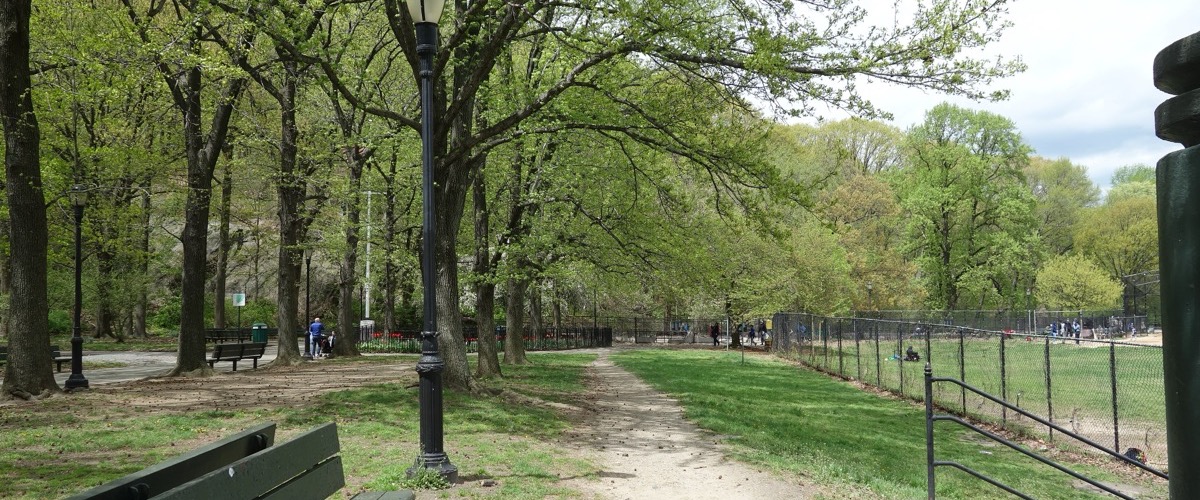
Downsizing in Washington Heights and Inwood
Washington Heights and Inwood fill the northern tip of Manhattan, with two large hospitals, two big parks on the Hudson and subway lines that run the length of the area. This page covers the housing, transit, health care, parks and tax questions to weigh if you are moving from a larger home into a smaller one here.
- Local government
- City of New York (New York County, Community District 12)
- Smaller-home types
- Co-ops, condos, apartment buildings
- Nearest hospitals
- NewYork-Presbyterian/Columbia; NewYork-Presbyterian Allen
- Evacuation zone
- Check by address
Washington Heights and Inwood at a glance
NYC Planning treats this area as three neighborhoods: Washington Heights (South), Washington Heights (North) and Inwood, all in Manhattan Community District 12. The Hudson River parks run along the west edge, and the A and 1 trains run the length of it.
The area carries a lot of Revolutionary War history. NYC Parks says Fort Washington Park is named for a Revolutionary War fort built by the rebels and seized by the British, and that the site of Isham Park was a landing point for Hessian troops during the battle of Fort Washington. Inwood Hill Park, the parks agency adds, still holds the last natural salt marsh in Manhattan.
Sources: NYC Parks, Fort Washington Park; NYC Parks, Isham Park; NYC Parks, Inwood Hill Park.
Apartments, co-ops and condos in Washington Heights and Inwood
This is an apartment-building area more than a row-house one. The City Planning Commission's report on the Audubon Park Historic District, which the Landmarks Preservation Commission (LPC) designated on May 12, 2009, describes apartment buildings built between 1905 and 1932. The LPC's Manhattan list also includes the Audubon Terrace Historic District (1979), the Jumel Terrace Historic District (1970) and the Park Terrace West-West 217th Street Historic District. If a building sits inside one, exterior work goes through the LPC.
For a move to less space, the choices are usually these:
- Co-op apartments. You buy shares and receive a proprietary lease. The board package, financial rules, any flip tax and the sublet policy come from the building's documents, not state law. New York City adopted a 2026 law setting deadlines for co-op boards to act on applications; ask your attorney whether it covers a given building.
- Condominiums. You own a deeded unit plus a share of the common elements. Common charges follow the declaration and bylaws.
- Elevator versus walk-up. Many older buildings have no elevator, and some of the hills are steep, so count the flights and the grade between the door and the subway.
Co-ops and condos do not come with the state's property condition disclosure statement; a one- to four-family house does. See the co-op, condo, townhouse or house guide for the differences.
Sources: NYC Planning, Audubon Park Historic District report; LPC, Manhattan historic districts; NY Attorney General, cooperatives.
Getting around Washington Heights and Inwood
The A is the long-distance line. The MTA's A line page lists 145 St (local and express), 168 St (local and express, accessible, with the C), 175 St (accessible), 181 St (accessible), 190 St, Dyckman St and Inwood-207 St, the terminal, which it marks accessible. The 1 is local the whole way: 157 St, 168 St, 181 St, 191 St, Dyckman St (accessible), 207 St and 215 St. The C also runs local to 168 St.
Accessibility is uneven. On the MTA's 1 line page only Dyckman St is marked accessible among those stops, so if you use a cane, a walker or have knees that dislike stairs, check the accessible stations list before you pick a block. For specific trips use the MTA trip planner, and see our guide to getting around New York City after 65.
Sources: MTA, A line; MTA, 1 line; MTA, C line.
Hospitals and health care in Washington Heights and Inwood
The city Health Department's list of Manhattan emergency departments includes NewYork-Presbyterian Hospital/Columbia at 630 West 168th Street and NewYork-Presbyterian Allen Hospital at 5141 Broadway, the latter in Inwood. The same list includes Harlem Hospital Center at 506 Lenox Avenue and Mount Sinai Morningside at 1111 Amsterdam Avenue to the south. Check which hospitals, specialists and clinics your plan and doctors use before letting a map decide for you.
Sources: NYC Health Department, emergency departments.
Parks, museums and everyday life in Washington Heights and Inwood
- Fort Tryon Park. NYC Parks lists it from Riverside Drive to Broadway and West 192nd Street to Dyckman Street, 67 acres with 8 miles of pathways. It holds the Heather Garden and The Met Cloisters, which the parks agency describes as a Metropolitan Museum of Art branch housing nearly 5,000 medieval works.
- Fort Washington Park. A 160-acre Hudson River strip from West 155th Street to Dyckman Street, with ball fields, courts, a playground and the Little Red Lighthouse.
- Highbridge Park. Runs from West 155th Street to Dyckman Street and has a recreation center and pool that NYC Parks says have operated since 1936.
- Inwood Hill Park. Forest, the salt marsh, a hiking trail, the Hudson River Bike Trail and athletic fields, bounded by Dyckman Street and the Hudson and Harlem rivers.
- Museums. The Hispanic Society Museum & Library is on Broadway between 155th and 156th Streets and is open Thursday through Sunday, noon to 5 p.m. The Dyckman Farmhouse Museum is at 4881 Broadway. Confirm hours before a visit.
- Libraries and older adult programs. Find the nearest branch in the NYPL location finder. NYC Aging lets you find a center near you.
Sources: NYC Parks, Fort Tryon Park; Fort Washington Park; Highbridge Park; Hispanic Society; Dyckman Farmhouse Museum.
Storms, flooding and insurance in Washington Heights and Inwood
Flood and evacuation risk differ by block, and the two maps measure different things. New York City's evacuation zones rank storm surge risk, while FEMA flood maps drive insurance requirements. Look up any address in the city's hurricane evacuation zone finder and on the FEMA Flood Map Service Center. Standard homeowner, condo and co-op policies exclude flood, and a unit owner's policy generally covers the interior and contents while the association's policy covers the structure. Read our flood and storm insurance guide and ask the managing agent what the building's policy covers.
Taxes and local government in Washington Heights and Inwood
Washington Heights and Inwood is in the City of New York and New York County, so the property tax bill and exemptions come from the city's Department of Finance. Three programs are worth checking:
- SCHE. The Senior Citizen Homeowners' Exemption requires age 65 or older, a primary residence and combined owner income of $58,399 or less, and reduces assessed value by 50% down to 5% on a sliding scale. Co-op owners apply through a separate process. The city's 311 page for the 2026/27 cycle showed a March 16, 2026 deadline; check the current date.
- Enhanced STAR. For owners 65 and older with income of $110,750 or less for 2026-27, it applies mainly to school taxes and, in New York City, partly to city taxes. Ask the managing agent how co-op shareholders receive it.
- Co-op and condo abatement. The board applies for the whole building by February 15 each year, and owners certify that the unit is a primary residence.
Selling has its own costs, including the NYC Real Property Transfer Tax at 1% of the price up to $500,000 and 1.425% above. See costs and money and the net proceeds calculator. This is general information, not tax advice.
Sources: NYC311, SCHE; NYS Tax, STAR; NYC Finance, co-op and condo abatement; NYC Finance, RPTT.
Questions to ask before you buy in Washington Heights and Inwood
- Is the building a co-op, a condo or a rental, and what does the offering plan or declaration say?
- For a co-op, what does the board package require, how long does approval usually take and is there a flip tax? Flip taxes are set by each building, so get the amount in writing.
- Is there an elevator, and how many steps lie between the street, the lobby and your door?
- Which subway station would you use, and is it marked accessible on the MTA list? How steep is the walk?
- Is the building inside a historic district, and what does that mean for windows or facade work?
- What are the building's reserves, underlying mortgage and any planned assessments?
- Which hospital and which doctors does your insurance cover, and how would you get there?
Compare this with Harlem to the south and Riverdale across the Harlem River, or read the co-op, condo, townhouse or house guide. Browse all neighborhoods or start with the step-by-step downsizing guide. Introductions through this site go to agents on the operating team at eXp Realty, so this is not a search of the whole market. If you want one, get matched with a downsizing specialist.
Questions people ask
What kinds of homes can a downsizer find in Washington Heights and Inwood?
Mostly apartments. The Landmarks Preservation Commission describes the Audubon Park Historic District as apartment buildings built between 1905 and 1932, and the area has many other apartment buildings of different eras. Whether a given apartment is a co-op, a condo or a rental depends on the building, so confirm the ownership type and read the co-op and condo buying guide before you tour.
Which subway lines serve the top of Manhattan?
The MTA lists the A at 145 St, 168 St, 175 St, 181 St, 190 St, Dyckman St and Inwood-207 St, and the 1 at 157 St, 168 St, 181 St, 191 St, Dyckman St, 207 St and 215 St. The C runs local to 168 St. Several stations are not marked accessible, so check each one on the MTA accessible stations list.
Which hospitals are closest?
The city Health Department lists NewYork-Presbyterian Hospital/Columbia at 630 West 168th Street and NewYork-Presbyterian Allen Hospital at 5141 Broadway as Manhattan hospitals with emergency departments. Which is closer depends on your block, and which is covered depends on your insurance.
What senior tax relief applies here?
The area is in New York City, so owners can look at the Senior Citizen Homeowners' Exemption (SCHE), Enhanced STAR and, for co-op and condo owners, the primary-residence abatement the building applies for. Each has age, income and residency tests, laid out below and in the senior exemptions guide.
More neighborhoods to compare
- Upper West SideCo-ops and condos between Central Park and Riverside Park, with the 1 and C lines.
- Upper East SideCo-op and condo buildings between Central Park and the East River, near major hospitals.
- Battery Park CityWaterfront condos and rentals on ground-leased land, with parks and a resilience build-out.
- Murray Hill and Kips BayEast Side co-ops, condos and brownstones near the 6 train, Grand Central and NYU Langone.
- ChelseaLandmarked row houses and large West Side co-op complexes beside the High Line.
- Greenwich Village and West VillageHistoric districts, row houses and apartment buildings around Washington Square Park.
Plan your move
We can introduce you to a licensed New York area agent with eXp Realty who works with homeowners moving to less house. New York Downsizing is operated by licensed agents affiliated with eXp Realty and is not a New York brokerage.